
A NEW treatment for BPDCN that does not require a hospital stay for infusion
See below for additional requirements when receiving DECNUPAZ including premedication and monitoring timing.
DECNUPAZ is a prescription medicine used to treat adults with blastic plasmacytoid dendritic cell neoplasm (BPDCN). It is not known if DECNUPAZ is safe and effective in children.
See below for additional requirements when receiving DECNUPAZ including premedication and monitoring timing.
See below for additional requirements when receiving DECNUPAZ including premedication and monitoring timing.
WHAT IS DECNUPAZ?
DECNUPAZ may affect cancer cells as well as certain healthy cells in the body, which can cause side effects.
DECNUPAZ is a type of medicine called an antibody-drug conjugate (ADC). ADCs are designed to attack cancer in a targeted way, which is different from traditional chemotherapies. DECNUPAZ works by targeting BPDCN cells that have a protein on them called CD123. CD123 is found on BPDCN cells and on other nearby cells.
Understanding how DECNUPAZ is designed to work may help you feel more informed and confident throughout your treatment experience.
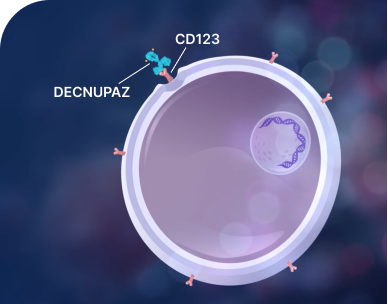
1 Attaches
DECNUPAZ attaches to CD123 on the outside of the cell

2 Attacks
Once inside the cell, DECNUPAZ releases a powerful cancer-killing medicine

3 Destroys
The medicine disrupts the cell’s DNA—so the cell can’t keep growing and eventually dies
HOW DECNUPAZ IS GIVEN
DECNUPAZ can be given as a short, outpatient infusion. As an outpatient infusion, this means that you will most likely not need to be admitted to or spend the night at a healthcare facility to receive treatment. See below for what your experience may look like, including premedication and monitoring expectations, and talk to your healthcare provider about what you can expect before and after treatment.

Directly into your vein.

Your healthcare provider will tell you how long your total treatment may take.
Your total treatment time will be longer than your infusion. Before each infusion, you will receive premedications. After each infusion, you will need to be monitored.

Your healthcare provider will decide how many infusions of DECNUPAZ you may receive. Talk to your healthcare provider about what your full treatment plan is and how long you may be on treatment.

Infusion day will look different for everyone, but below are general tips that can help you prepare. Be sure to discuss with your healthcare team what it will look like for you since they are your best source of information.
To make it easier to relax, try to wear loose, layered clothing that makes you feel comfortable. For even more comfort, think about bringing a light blanket or travel pillow.
Whether it’s reading a book, playing on a tablet, or knitting, consider bringing activities that can keep you busy. If you plan for someone to accompany you, be sure to ask about any rules for guests at the treatment center before infusion day.
On infusion days, try to keep as much of your usual routine as possible. This way, treatment feels like just one part of your day, not the whole focus.
During treatment, it’s important that you pay close attention to how you feel and share any changes with your healthcare team. Your healthcare team will also check for side effects and may provide treatment to help ease them. If side effects become severe, your treatment may be adjusted, delayed, or stopped.
BPDCN=blastic plasmacytoid dendritic cell neoplasm; DNA=deoxyribonucleic acid; IV=intravenous

If you or a loved one is starting treatment with DECNUPAZ, there may be many questions. Use our Doctor Discussion Guide to help talk openly with your healthcare provider or care team.
What is the most important information I should know about DECNUPAZ?
DECNUPAZ can cause serious side effects, including:
Your healthcare provider will check you for liver problems during your treatment with DECNUPAZ and may provide treatment for your side effects. Your healthcare provider may also delay or stop treatment with DECNUPAZ if you have severe liver problems.
What should I tell my healthcare provider before receiving DECNUPAZ?
Tell your healthcare provider about all of your medical conditions, including if you:
Females who are able to become pregnant:
Males who have female partners who are able to become pregnant:
Tell your healthcare provider about all the medicines you take, including prescription and over-the-counter medicines, vitamins, and herbal supplements. Certain medicines may affect DECNUPAZ and increase your risk of side effects.
What are the possible side effects of DECNUPAZ?
DECNUPAZ can cause serious side effects, including:
The most common side effects include:
The most common severe abnormal laboratory test results with DECNUPAZ include:
Your healthcare provider may decrease your dose, delay your infusion, or permanently stop treatment with DECNUPAZ if you have side effects.
DECNUPAZ may cause fertility problems in males and females, which may affect your ability to have children. Talk to your healthcare provider if you have concerns about fertility.
These are not all the possible side effects of DECNUPAZ. Call your doctor for medical advice about side effects.
You are encouraged to report negative side effects of prescription drugs to the FDA. Visit www.fda.gov/medwatch or call 1-800-FDA-1088.
What is DECNUPAZ?
DECNUPAZ is a prescription medicine used to treat adults with blastic plasmacytoid dendritic cell neoplasm (BPDCN).
It is not known if DECNUPAZ is safe and effective in children.
Please see full Prescribing Information, including BOXED WARNING, or visit https://www.rxabbvie.com/pdf/decnupaz_pi.pdf.
If you are having difficulty paying for your medicine, AbbVie may be able to help. Visit AbbVie.com/PatientAccessSupport to learn more.
US-DECB-260005